Shopping in English: Sizes, Prices, Returns, and Card Payments
Useful English for browsing, finding the right size, comparing prices, paying by card, requesting tax forms, and returning purchases.
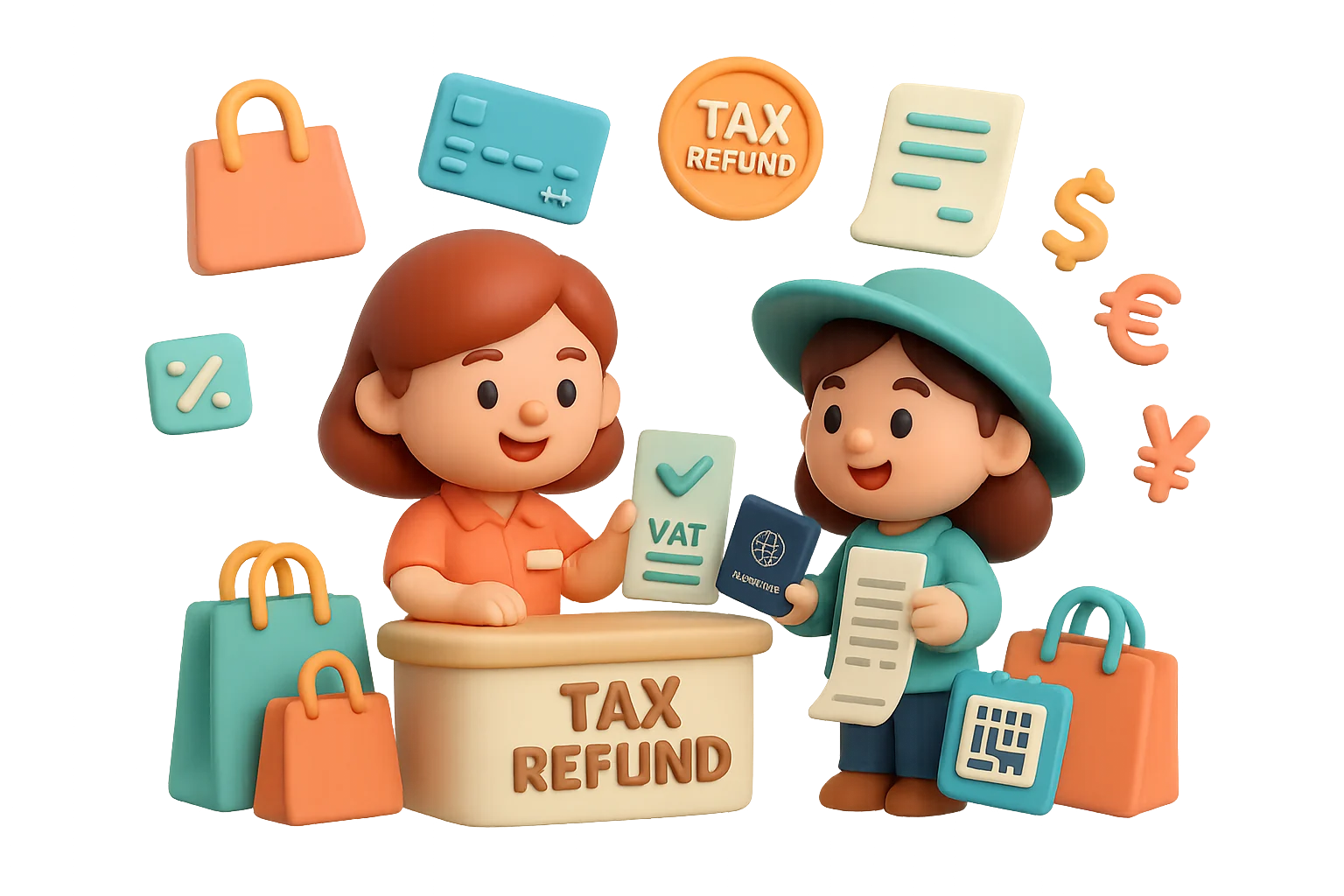
Shopping abroad is not just “How much is this?” You may need to find a size, understand a promotion, decline help, choose a card currency, or return something later.
Browsing and asking for help
If a shop assistant asks “Can I help you?”, you can say:
- “I’m just looking, thanks.”
- “Yes, I’m looking for a lightweight rain jacket.”
- “Do you sell phone chargers?”
- “Where can I find travel adapters?”
- “Do you have anything similar to this?”
“I’m just looking” is friendly and normal. It does not mean you promise not to buy.
Sizes, colours, and trying things on
- “Do you have this in a smaller size?”
- “Does this come in black?”
- “Could I try this on?”
- “Where are the fitting rooms?”
- “It’s a little tight around the shoulders.”
- “The size is right, but I’d prefer a different colour.”
Clothing sizes are not consistent between countries or brands. Ask for measurements if the purchase matters: “What is the waist measurement for this size?”
Prices and promotions
- “How much is this?”
- “Is this the final price?”
- “Is there a discount if I buy two?”
- “Is this included in the sale?”
- “What does ‘buy one, get one half price’ mean?”
- “Could you check the price, please? The shelf label was different.”
A receipt records your purchase. A refund returns your money. An exchange replaces an item with another item.
A natural shop dialogue
Assistant: Let me know if you need any help.
Customer: Thanks. Do you have this shirt in a medium?
Assistant: Let me check. We have a medium in blue, but not in green.
Customer: Could I try the blue one on?
Assistant: Of course. The fitting rooms are at the back.
Customer: It fits well. I’ll take it. Can I pay by card?
Assistant: Yes. Would you like a bag?
Customer: No, thank you. I have one.
Paying by card
- “Can I pay contactless?”
- “Do you accept this card?”
- “The card reader says the payment was declined.”
- “Could I try another card?”
- “Could I have a receipt, please?”
- “Can you email the receipt?”
Some terminals offer to charge you in your home currency. This is called dynamic currency conversion. The screen should show the options and rate; read them before choosing. If you want the local currency, say “Please charge me in local currency.”
Tax-free shopping
If visitors can claim a tax refund, ask:
- “Is tax-free shopping available?”
- “What is the minimum purchase?”
- “Could I have the tax-free form?”
- “Do I need to show my passport?”
- “Where do I validate this at the airport?”
Eligibility and procedures vary. Keep the receipt and ask whether the goods must remain unused until inspection.
Returns and exchanges
- “I’d like to return this, please.”
- “I bought it yesterday, but it doesn’t fit.”
- “It stopped working after one use.”
- “Could I exchange it for a larger size?”
- “I have the receipt and the original packaging.”
- “Will the refund go back to the same card?”
Check the return policy before buying sale items. “Final sale” often means returns are not accepted unless the item is faulty.
Practise with objects around you
Pick three items. For each one, ask about price, a different version, and the return policy. Then practise one payment problem. The same sentence patterns work for clothes, electronics, gifts, and travel essentials.
Practise before the conversation is real
Travel English turns airport, hotel, restaurant and emergency situations into short mobile speaking lessons.
All guides

Flight Delay English: What to Say When You Miss a Connection
Explain a delayed flight, ask about rebooking, confirm your baggage destination and understand a new itinerary with practical English dialogues.
Read guideLost Luggage English: Report a Missing Bag and Arrange Delivery
Describe a missing suitcase, understand baggage-desk questions, request a reference number and confirm delivery with clear travel English.
Read guide
Train Station English: Tickets, Platforms and Changing Trains
Buy the right train ticket, ask about platforms and transfers, understand seat reservations and clarify announcements with useful English phrases.
Read guide