여행자를 위한 의료 영어: 긴급 상황에서 도움을 받는 방법
긴급 상황에서 도움을 받기 위한 필수 의료 영어: 응급 서비스 호출, 증상 설명, 알레르기 및 약물 논의, 다음 단계 이해
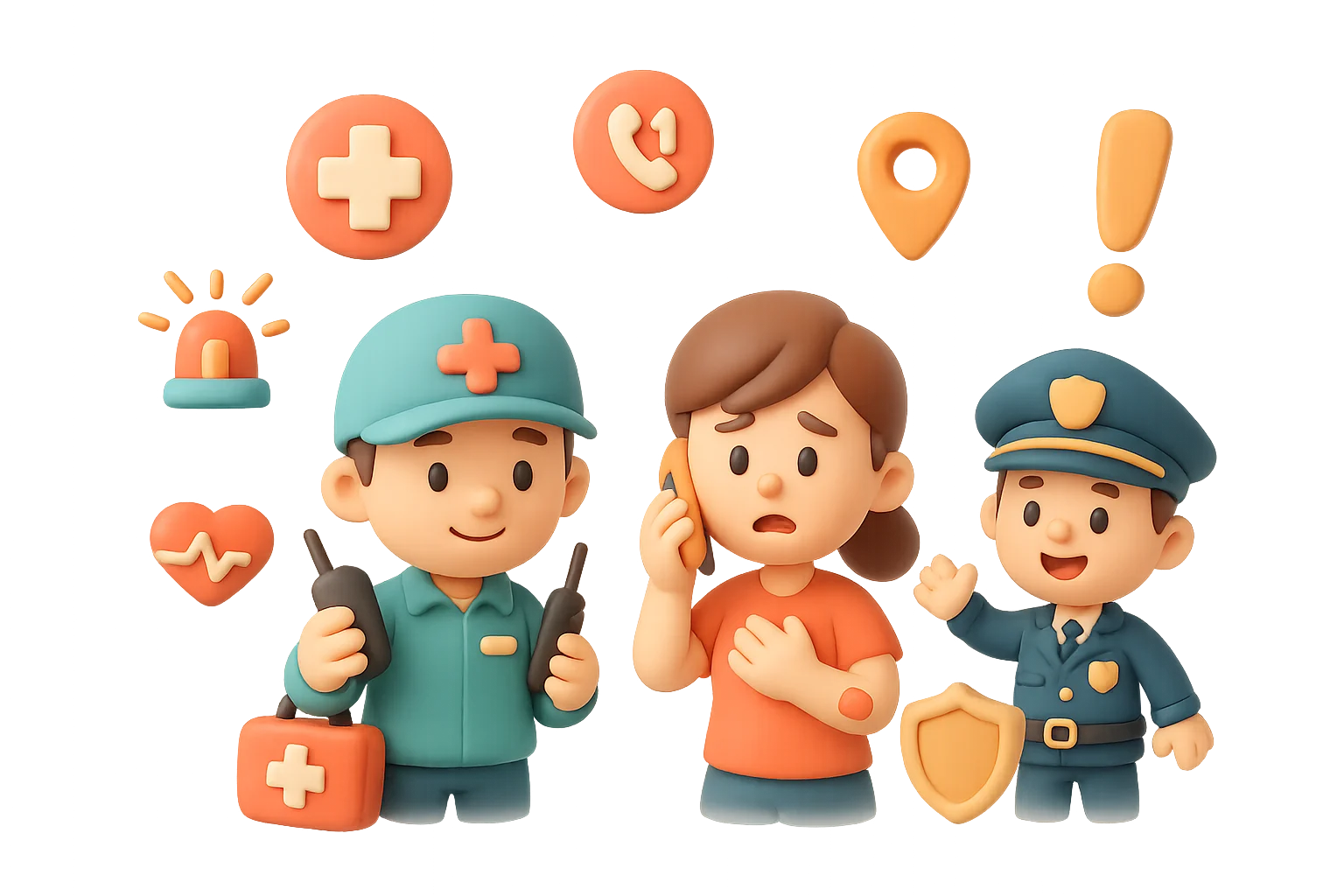
의료 상황에서 명확한 사실이 우선입니다. 무슨 일이 발생했는지, 어디에 있는지, 그리고 그 사람이 경험하는 것을 설명하세요. 짧은 문장을 사용하고 주요 세부 정보를 반복하세요.
이 가이드는 언어 준비를 지원합니다. 이는 의료 조언이 아닙니다. 응급 상황에서는 현지 응급 번호에 연락하고 자격을 가진 전문가의 지시에 따라야 합니다.
응급 도움 호출
위치와 위험부터 시작하세요:
- “We need an ambulance.”
- “A person has collapsed at the north entrance of Central Station.”
- “He is unconscious but breathing.”
- “She is having trouble breathing.”
- “There has been a road accident.”
- “Please send help. We are in room 412 at the City Hotel.”
운영자가 말하기 전까지 전화를 끊지 마세요. 그들은 전화 번호, 정확한 위치, 나이, 호흡 상태, 그리고 부상의 원인을 물을 수 있습니다.
증상 설명
- “I have a severe pain in my lower right side.”
- “I’ve had a fever since last night.”
- “I feel dizzy when I stand up.”
- “I’ve been vomiting for six hours.”
- “My throat feels swollen.”
- “I cut my hand on broken glass.”
- “The pain started suddenly.”
유용한 시간 구절에는 “for three hours” (기간)와 “since Tuesday” (시작점)이 포함됩니다.
통증 및 심각도
의사는 0에서 10까지의 통증을 평가하라고 요청할 수 있습니다. 또한 다음과 같이 설명할 수 있습니다:
- sharp —突然 또는 칼과 같은
- dull — 덜 강렬한, 종종 지속적인
- burning — 뜨거운 또는 자극적인
- throbbing — 뛰는 또는 맥박과 같은
- constant — 항상 존재하는
- comes and goes — 나타나고, 멈추고, 다시 나타나는
지시하는 것은 유용하지만, 단어를 추가하세요: “The pain is here, and it spreads to my back.”
알레르기, 질병, 및 약물
- “I’m allergic to penicillin.”
- “I have asthma.”
- “I take this medicine once a day.”
- “My last dose was at eight this morning.”
- “I’m not taking any other medication.”
- “Could this interact with my prescription?”
- “Is it safe to drive after taking this?”
약물을 라벨이 붙은 포장에 넣고, 일반 약물 이름, 용량, 질병, 알레르기, 및 응급 연락처를 적은 목록을 보관하세요.
진료소에서: 현실적인 대화
의사: What brings you in today?
여행자: I fell on some steps and hurt my ankle. It happened about two hours ago.
의사: Can you put any weight on it?
여행자: A little, but the pain is getting worse. It’s swollen here.
의사: Are you allergic to any medication?
여행자: Yes, penicillin. I don’t have any other known allergies.
의사: We’ll examine the ankle and may take an X-ray.
여행자: All right. Could you also give me a report for my travel insurer?
지시 이해
- “How often should I take this?”
- “Should I take it with food?”
- “For how many days?”
- “What side effects should I watch for?”
- “When should I seek urgent help?”
- “Do I need a follow-up appointment?”
- “Could you write that down, please?”
계획을 다시 반복하세요: “So I take one tablet twice a day with food for five days—is that correct?” 이 기술은 오해를 잡습니다.
보험 및 지불
- “Do you accept travel insurance?”
- “Do I need to pay upfront?”
- “Could I have an itemised receipt?”
- “I need a medical report for my insurer.”
- “Could you include the diagnosis and treatment on the report?”
실제적인 경우에 보험회사에 연락하세요. 그러나 응급 치료를 지연시키지 마세요.
여행 전 준비
목적지의 응급 번호, 보험회사 연락처, 정책 번호, 숙소 주소, 및 번역된 의료 요약을 저장하세요. 알레르기 및 현재 약물을 큰 소리로 말하세요. 스트레스 상황에서 익숙한 문장은 훨씬 더 쉽게 회복됩니다.
실제 대화 전에 미리 연습하세요
공항, 호텔, 식당, 응급 상황을 짧은 모바일 말하기 수업으로 연습할 수 있습니다.
모든 가이드
외국에서 여권 분실 시 필요한 영어: 경찰과 대사관에서
여권 분실이나 도난 신고, 대사관 연락, 및 긴급 여행 서류 준비를 위한 단계별 언어 가이드
가이드 읽기
환승을 놓쳤을 때 영어: 지연, 재예약, 수하물 확인하기
항공편 지연으로 환승을 놓쳤을 때 상황을 설명하고 재예약과 수하물 이동을 확인하는 자연스러운 영어를 익혀 보세요.
가이드 읽기공항에서 수하물이 나오지 않을 때 영어: 신고와 배송 확인
부친 수하물이 도착하지 않았을 때 분실 신고를 하고 추적 번호와 배송지를 확인하는 실전 영어를 익혀 보세요.
가이드 읽기